We Tested 12 Free Woodworking Plan Sources. Most Failed at Step Four.
Affiliate Disclosure: This article about Ted's Woodworking contains affiliate links. If you purchase through our links, we may earn a commission at no additional cost to you. We only recommend products we genuinely believe in. Read our full disclosure.
Frank approached retirement woodworking the way he approached most things: methodically.
He researched tools before buying them. He watched instructional videos before attempting techniques. When he sat down to find plans for his first serious project — a storage bench for the mudroom — he spent three hours comparing options before choosing one that looked thorough and well-documented.
It failed at step four.
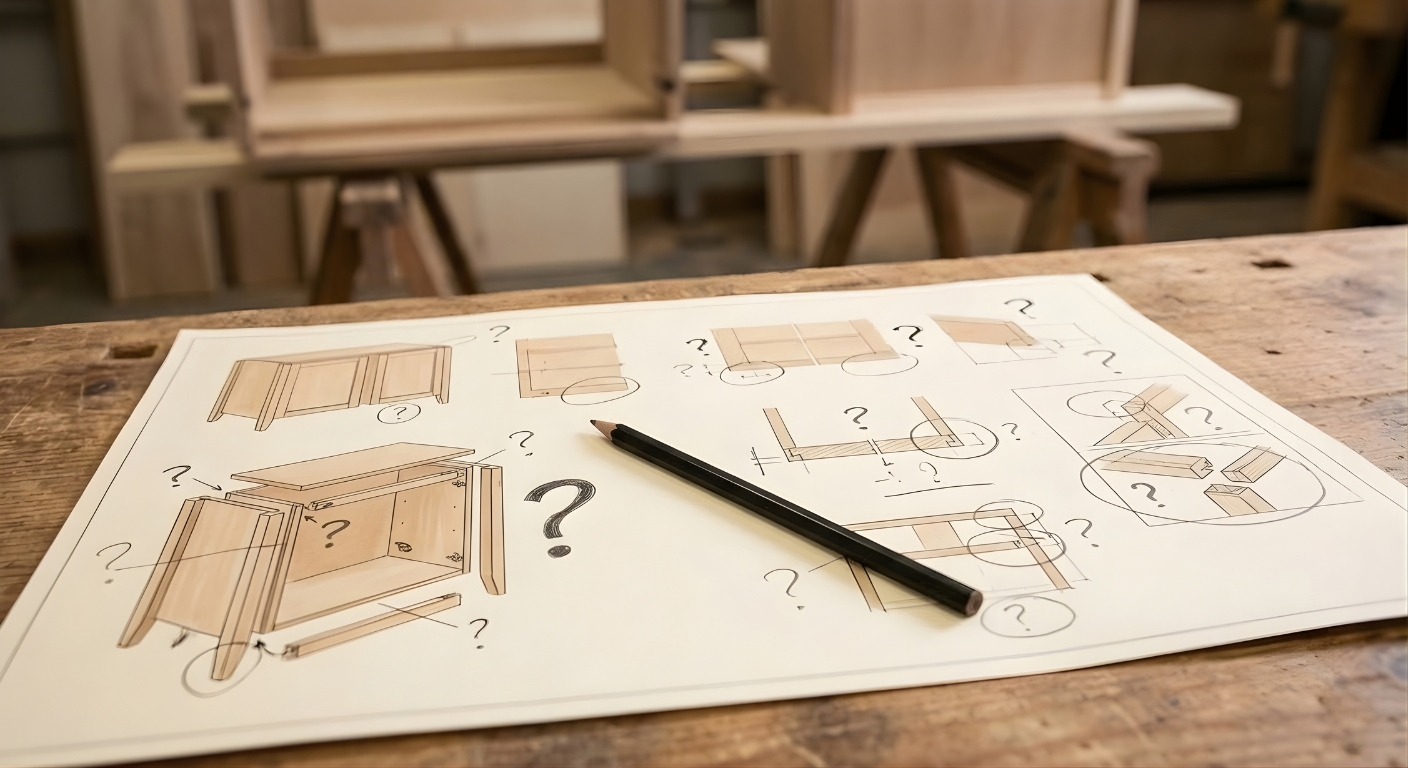
Not dramatically. Not with a broken tool or a dangerous mistake. It simply reached a step that assumed knowledge he didn't have, described a process without sufficient specificity to follow, and left him standing at the bench with two pieces that needed to connect and no clear picture of how.
He tried two more plans from two different sources. Both failed at similar points.
"I thought I was doing something wrong. After the third plan, I started to think the plans were doing something wrong."
We decided to test this systematically.
The Test
We selected 12 free woodworking plan sources — content sites, DIY blogs, YouTube channel companion documents, and Pinterest-linked PDFs — and attempted to follow a beginner-level plan from each one using only the documentation provided, without supplementing with outside knowledge.
The test criteria were straightforward: could a person with basic tool competency but no project-specific experience follow the plan to a complete result using only what the plan provided?
Eight of the twelve plans failed to meet that standard. The failure points were consistent.
Step-skipping was the most common issue. Plans regularly described early stages in detail and then condensed later stages into single steps that contained multiple distinct operations. "Assemble the frame" as a single step, when frame assembly involves dry-fitting, checking for square, applying adhesive in a specific sequence, and clamping in a specific order, isn't an instruction. It's an endpoint with the path removed.
Measurement gaps were the second most common issue. Several plans specified dimensions without accounting for the difference between nominal and actual lumber sizes — a dimensional 2x4 measures 1.5 inches by 3.5 inches, not 2 inches by 4 inches. Plans that don't account for this produce pieces that don't fit together at the dimensions specified.
Materials list omissions were present in seven of the twelve plans. Lists that specified primary lumber quantities but omitted fasteners, adhesives, or finishing materials meant at least one additional hardware store trip before the project could be completed.
The four plans that passed were from sources where the author had clearly built the specific project being documented and written the instructions based on the actual build experience rather than from a design or diagram.
What That Pattern Tells Us
The consistent failure mode across sources points to a single root cause: most freely available plans are written by people who already know how to do what the plan describes.
When you know how to build something, the steps that require knowledge feel obvious. You don't write them out in full because you've internalized them. The result is instructions that work if you already know woodworking and are using the plan as a reference, but fail if you're relying on the plan to teach you what to do.
This isn't a problem that better writing alone solves. It requires someone who doesn't know how to build the specific piece to follow the instructions and identify where they break down. That's a testing process, not a writing process.
Ted's Woodworking's Testing Model
We investigated Ted's Woodworking because it describes a testing process that directly addresses this failure mode. Every plan is built by a team that didn't write it, with specific instructions to flag every step that requires knowledge the documentation doesn't provide. The plan is revised and rebuilt until someone unfamiliar with the project can follow it to completion.
Over 16,000 plans have gone through this process across more than 25 years. The library covers furniture, storage, outdoor structures, workshop equipment, and specialty projects at beginner, intermediate, and advanced levels.
For Frank, the practical implication is that the plans he's following were written to be followed by someone who doesn't already know what to do. The step that tripped him up in three consecutive free plans — the one where the documentation ran out before the project was finished — is the step the testing process is specifically designed to catch.
The testing methodology matters across all kinds of build documentation, and understanding what a complete plan actually contains is the first step toward knowing whether what you have is one.
What We'd Note Before Starting
Ted's Woodworking is a digital library. Plans are downloaded and printed as needed. Access is one-time purchase, with new plans added monthly at no additional cost.
Navigation requires some initial investment. The keyword search is the most efficient entry point for users with a specific project in mind. The category filters — furniture, outdoor, storage, workshop — help narrow the field for users who are browsing.
This Is For You If…
- You've followed multiple free plans and encountered the same failure points repeatedly
- You're new to woodworking and want instructions that don't assume prior knowledge
- You want a library large enough to sustain years of projects at increasing difficulty levels
- You value a testing process that verifies plans work before they reach you
This Is NOT For You If…
- You're an experienced woodworker who writes your own plans
- You want physical printed materials rather than a digital library
- You're looking for a single plan rather than a comprehensive library
- You need structural or commercial construction documentation
What Frank Built After
The storage bench is finished. It's in the mudroom. It works.
He built it from a plan that had been built before he got to it — where the step that previously tripped him up was written out in full, with the sequence explained and the dimensions verified against actual material sizes.
He's since built a bookcase and started on the rocking chair he'd sketched out before he retired. He's not working from free plans anymore.
Recommended Resource
16,000 Plans. Every One Built and Tested Before You See It.
Step-by-step instructions written for people who don't already know what to do — with cut lists, assembly sequences, and materials lists that actually work.
See the Complete Plan Library →Affiliate link — we earn a commission at no cost to you.